Showing posts with label Hegel. Show all posts

Wednesday, May 16, 2012

What I’ve learned from IB Philosophy this year

Herclitus -
  • “No man ever steps in the same river twice”
  • Flux and constant change are the thread of life.

Parmenides -
  • Change is impossible and existence is both timeless and unchanging.

Hume -
  • You can only assume that the sun is going to rise tomorrow, you don’t KNOW it is.
  • Reason always is rooted in our passions, first and foremost.
  • You have to trust your sensory perceptions, because you need to be aware of your surroundings in order to get anywhere.
    • If you ignore the context under which you are operating, then you are lost.

Descartes -
  • To “know” anything, you must first doubt everything.
  • Only by looking at the limitations of your knowledge can you realize any truths about the world.
  • There is so much to be gained from thinking rationally about a subject, trying to anlzye it without bias and without subjectivity.

Nietzsche -
  • By existing, you have the will to exist, you want to exist, and nobody can take that away from you.
  • The Church, or any other powerful institution like it, will always look to control people. Life is about going through a process of self-affirmation and realizing your own value and worth.

Kierkegaard -
  • How to look at events from a teleological perspective, and how to recognize the limitations of that sort of thinking.
  • How to live in the moment.
  • Your existence in this very moment, the fact that you are alive, conscious, and can make decisions is something that is absolutely incredible.

Plato -
  • The importance of justice.
    • Why do people act well?
      • Because they need to be just.
        • But WHY?
  • How important it is to look at all sides of an issue to reach a consensus, because if you only approach something from a single viewpoint, you lose the valuable aspect of preventing a completely insular view.

Marx -
  • You only get out of something what you put into it.
  • Your identity is based off of your job because how else can you identiy yourself, if not by that which you contribute to this world?

Hegel -
  • You cannot live as a hermit, you must integrate yourself to others.
  • You are not dependent on others to form your identity, but you only realize yourself by connecting and talking with others.

Buddhism -
  • You do not exist in a bubble - everything is a part of something else.
  • We do not exist as seperate beings; we need to rid ourselves of the notion of the Western Ego.
  • “If we look closely at both the concepts of defiled and immaculate, we return to the notion of inter-being.”

Kant -
  • Treat others how you want to be treated.
  • Respect other people’s autonomy.
  • Look at other people not as a means to an end, but as end-in-themselves.

Wittgenstein -
  • Never generalize anything - everything exists as a unique instance.
  • There are certain things that cannot be expressed through words.
  • The best kind of learning is experiential learning.

In conclusion, in philosophy, you can have both the essence and existence. Both the Dao and the self. Both oneness and a soul. In philosophy, it’s all about what you want to do with your life, and the choices you make. It’s about realizing what surrounds you, and realizing that you are a part of it. Philosophy, like life, is all about inspiration.

Saturday, November 5, 2011

Hegel was on to something

So, I've been thinking about Hegel's idea of mutual recognition (thank you Anne and Nomka! - the two Sartre quotes), and I'm pretty sure that Hegel has a good idea. His whole concept of only being able to attain this level of self-consciousness through mutual recognition was a little confusing at first, and, in fact, I considered it downright incorrect. However, thinking on it more, I have discovered more validity in this statement. Sure, you can be yourself, define yourself by your own morals, and not by what others may think of you, but there is also a part, a significant part of you which is STRONGLY influenced by others. We have no control over this influence for at least the first 13-15 years of our life, because we are not consciousness of it. But I think the point that Hegel is trying to make, or at least what I'm getting out of it, is that by realizing that this other influence exists, and   that it is exerting influence on you, you are able to understand yourself more fully. This recognition of the other being's recognition of YOU is what allows us to understand ourselves to the greatest extent.

Tuesday, October 25, 2011

Three items that I want right now, in 6 months, and in 5 years

New shoes
Graduate
Switzerland
I chose each of these because:
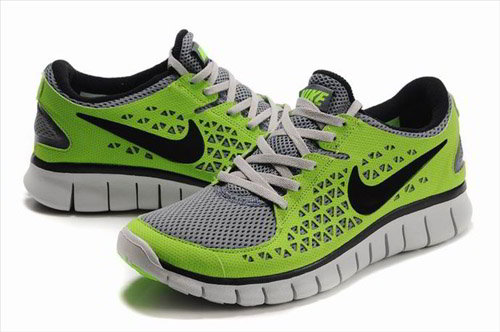
1. New shoes - my current running shoes are about 3-4 months old and have approximately 5 sizable holes in them. Some new ones would be much appreciated - and much more comfy. There are a representation of my self-consciousness because they show my passion, as well as commitment to running.

2. Graduate- I want to graduate in six months. That would be ideal. It's not really a fear that I wouldn't be able to, but it is a nice thought to know that I will. I think this represents my self-consciousness because it demonstrates my love of knowledge, and my goal of pursuing further education.

3. Switzerland! - This is where I want to be in 5 years. I am currently applying to Franklin College Switzerland, which is my top choice. It would be absolutely amazing to me if I got in, and I think this is why it represents part of my self-consciousness, because it shows how much I want to travel, and learn about foreign cultures, and languages, etc.

Tuesday, September 13, 2011

Class Discussions on 9/13/11 and Sophie's World Questions 4-6

"The hardest kind of thinking is thinking about thinking" Anna, aged 9

This was our morning quote, which prompted our discussion on metacognition. Also known as Introspection or reflection, this is the process of thinking about what thinking is.

There were some good points made, especially by Maddy, "What do blind people dream of?" and by Jasmine, talking about our blindfold experience and how things were suddenly "in the forefront of your mind."

This prompted me to think about Plato's world of ideas, and world of the senses. I wondered, what did blind people dream of? Could they imagine colors, and shapes? What credit did this give to Plato's world of ideas? Can you ever discover something without relating it back to something else for a frame of reference?

Emma also made a comment about how the premise of Sophie's World (questions 4) is about the "top hat, and the white hairs of the rabbit." She stated that Hilde's father wants her (Hilde) to be on the very tips of the fur.
Also on question 4, Jasmine made a comment about how no one is too young to think about the philosophical topics discussed in the book, and how these are actually some of the most important things to discuss - about who we are, what are purpose is, etc.
Lastly, Anne stated that Philosophy matters to everyone.

Question 5:
I stated my thoughts that one of the author's beliefs was women's rights. I think this because of the frequency of times that Alberto brings it up when discussing his plethora of philosophers.
Emma - I think the author made the subject a girl to show how women can also think critically.
Kevin - More women actually go to college than men.
Helen - Even though women can be more educated, you look at Forbes list of top 100 CEO's and they're almost all men ( referencing Malcolm Gladwell's Outliers)


Question 6:
Luke- Free will is illusion- look at Sophie within her world
Alex - How is anything we perceive, even if it's all an illusion, any less real, at least to us?
Maddy - Sophie and Alberto think they have free will, but do they really influence anything?


This last question got me to thinking about free will. Do we actually have free will or not? Is there such a thing as destiny? Do our choices matter? I was talking to Alex about this, and we thought, that maybe there is a sort of fate, but it's not all-encompassing. Maybe, as Hegel believes, there is this "world spirit" which ultimately leads us to this end point, but there are a couple different choices for us to choose from. It's like a combination of free will and destiny, but with limits on all your choices. For example, I have the choice or option of jumping out my window right now, but it's quite rainy, and I'm warm and cozy at the moment. So that is something that is so unlikely to happen that it actually limits my choices. Maybe free will DOES exist, but in stricter sense than we imagine.